
Tripping over a mountain of shoes the second you walk through the door?
You aren’t alone, but that doesn’t make it any less frustrating.
For many of us, the entryway is a total hot mess that creates a sense of panic and physical chaos before we even get our coats off.
We want that Pinterest-perfect mudroom, but the reality of kids, pets, and busy mornings usually wins out.
The good news is that you don’t need a massive home or a high-end designer to create a functional drop zone!
This post has a bunch of mudroom storage ideas that work for real life.
Whether you have a dedicated room, a shared laundry area, or even just a sliver of space in the garage, you can build a system that works.
Read on for practical mudroom storage ideas that will help you move from chaotic to calm.
Why Most Mudroom Design Fails
Most people fall into the product-first approach trap.
They head to the store and buy a beautiful bench or a set of matching bins before they’ve figured out what they need.
Once home, they load up the bins and baskets only to discover that they have far more that will ever fit into the containers.
The cute shoe rack is already full, but there’s at least 10 more pairs of shoes that don’t have a home, not to mention the pile of boots that need to go somewhere.
The cure for this unfortunate chaotic situation is to be thoughtful and intentional with a plan for the mudroom.
The solutions need to match your belongings to balance the space.
Let’s go over what you need to know in order to set up a functional mudroom to ease some of the stress in your life.
It’s easier than you’re anticipating!
Setting Up a Functional Space: Mudroom Storage Ideas
A well-organized mudroom functions like an airlock, keeping the chaos of the outside world from drifting into your home.
Overstatement? I don’t think so.
Just having a designated space to act as a mudroom isn’t enough to make the space functional.
The key is to set up a system with enough structure to literally contain all of your stuff.
The space needs to handle shoes, boots, raincoats and winter jackets that you’re using throughout the days.
Here are the primary considerations for designing an effective mudroom:
Storage Hierarchy
Every item needs a designated home based on how often it’s used.
Think of your storage in three tiers:

Active Use
The best strategy includes hooks and open cubbies for daily use coats and bags.
This basket is the perfect home for hats and gloves during the winter months.
When the weather turns warmer, the basket gets put away in the front hall closet for a quick and painless seasonal swap.
Infrequent Use
Occasionally used items shouldn’t live in the easiest to access prime real estate area in the mudroom.
Off Season Storage
Drawers or bins for seasonal gear (gloves in winter, sunscreen/hats in summer, for example).
This doesn’t necessarily need to live in the mudroom.
Storing it elsewhere is fine, as long as there’s room for the items in the mudroom when they’re needed.
Essential Mudroom Components
Here are some essentials to make sure your mudroom space has:
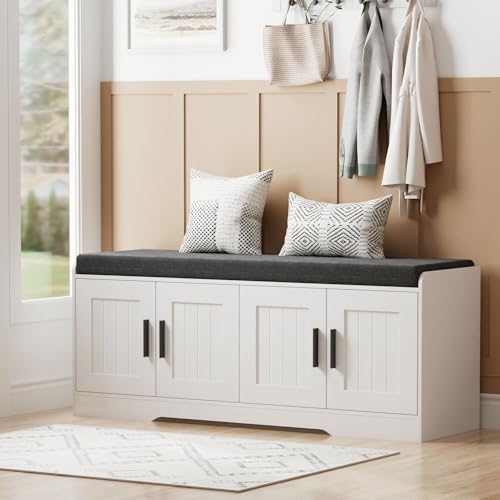
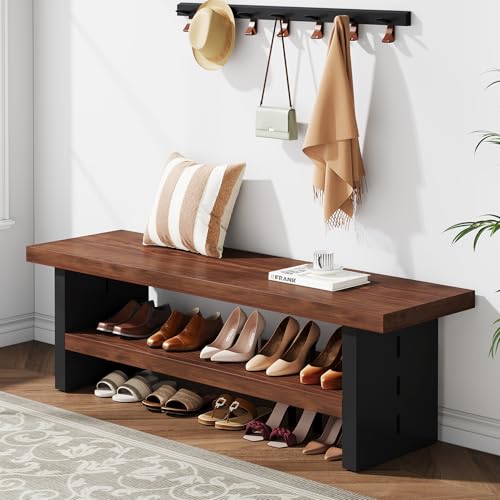
Mudroom Seating
Having a place to sit to put on and remove footwear is an absolute must.
The seating doesn’t necessarily need to be in the mudroom itself, having a place to sit in an adjacent space is enough.
You’re not limited to a single choice of seating for the mudroom, take a peek at a few ideas:

Mudroom Coat and Bag Storage
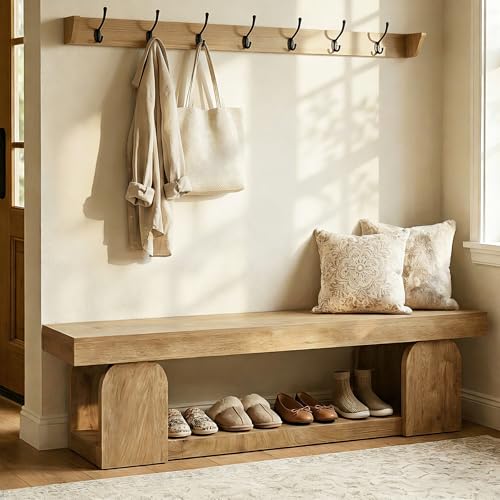
Hooks provide an instant home for coats, jackets, backpacks and purses.
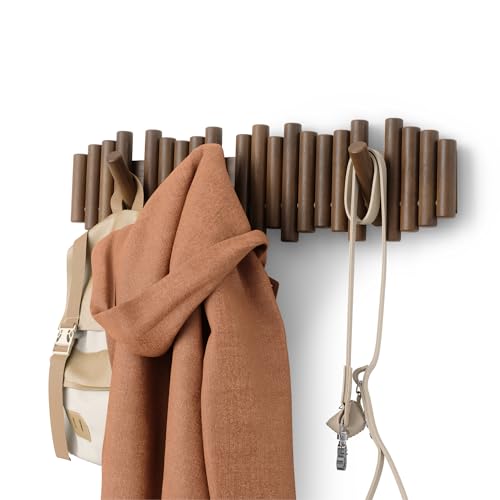

Position hooks so all family members can reach them.
Add a row of hooks lower for your children means they can both retrieve and hang up their coats, leaving you with one less thing to manage.

Make it fun by adding some whimsical hooks.
They’ll make you smile every time you seen them!
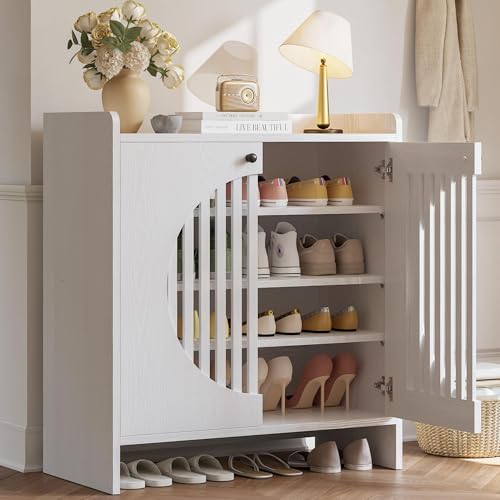
Mudroom Shoe Storage
A system to store shoes near your entry way will keep your entire home cleaner since shoes truck in a lot of dirt and debris.
Having a system to keep them in order and not in an overwhelming pile is a good start for a functional mudroom.
Put all of the shoes you wish to keep on hand in the mudroom in a line and measure.
This will tell you how much space you need to store them all.
If you can’t find a shoe storage solution to fit them all, then you’ll need to store a few pairs of shoes elsewhere.
If you have kids, know that you’ll need more storage space as you go on since the kids’ feet will only get bigger.
Keep this in mind so that you can plan for a flexible shoe storage system.

Choosing a stacking system is one of the best ways to easily add in more storage.
This Closetmaid stacking shelf has been a reliable workhorse in my home and has made it easy to add additional shelf when needed.
Like when my kids got older and their shoes got bigger, causing us to outgrow the single shelf that had previously worked for years.
Here are some other good ideas for mudroom shoe storage:


Boot Storage
Don’t forget about space to store boots!
Snow and rain means wet and sometimes mucky boots, so having a space for them will help keep your home free from the mess.
Collect your boots, line them up and then measure the space you’ll need to store them in-season.
Don’t try to guess about the space you’ll need.
It’s better to have the real number and find a boot rack that’ll fit everything you need.
Here are some boot storage systems to consider:
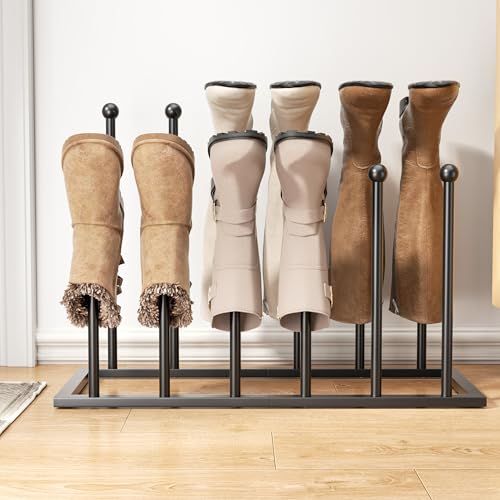

Combining seating and storage is a smart way to pick in a lot of function into a small amount of space.

A tray will help contain the water and muck from getting all over your floor.
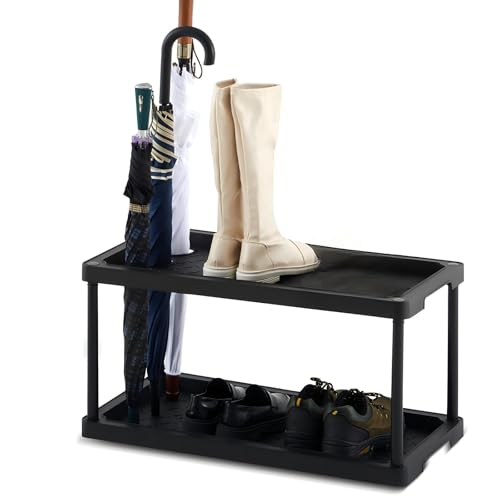
Double the storage space by choosing a stacking shoe rack with integrated trays.
Locker-Style Mudroom Storage Ideas
Pinterest is filled with loads of ideas for locker style mudrooms.
A renovation may be in your future, but you need a solution to handle your coats, bags and shoe gear today.
You can have an organized mudroom with enough storage without fancy built ins.
It’s easy enough to fake it with a bank of hooks, a storage bench with integrated shoe storage.
Here are a few options for mudroom furniture that provide a lot of storage space that give the locker look and feel and have ample space for all of your stuff:
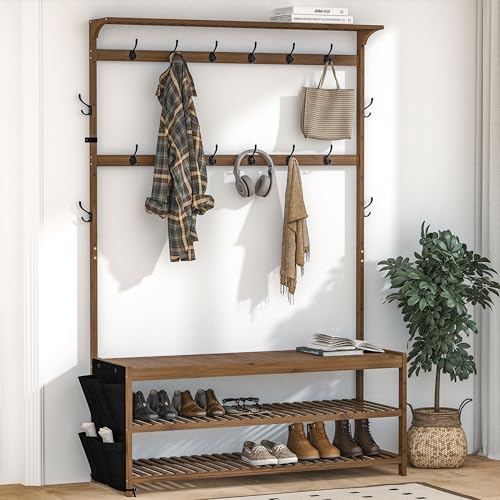
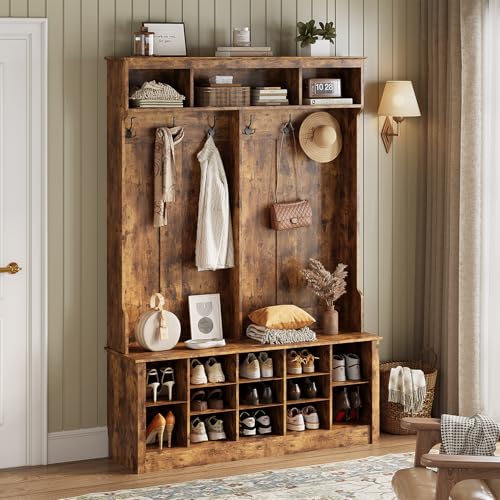
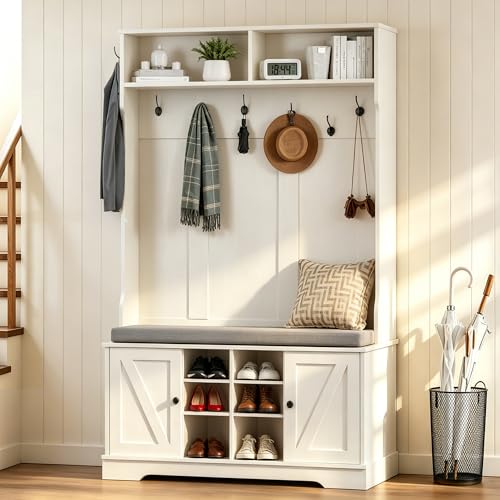
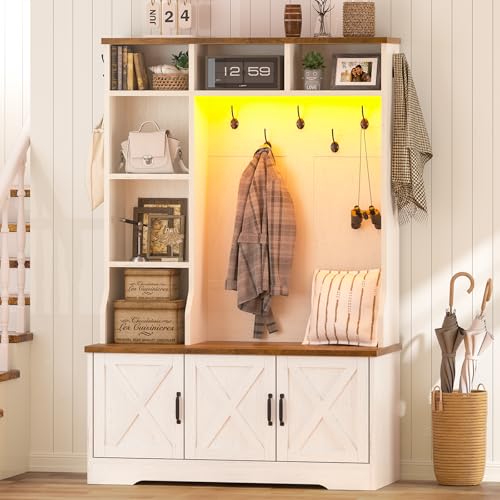
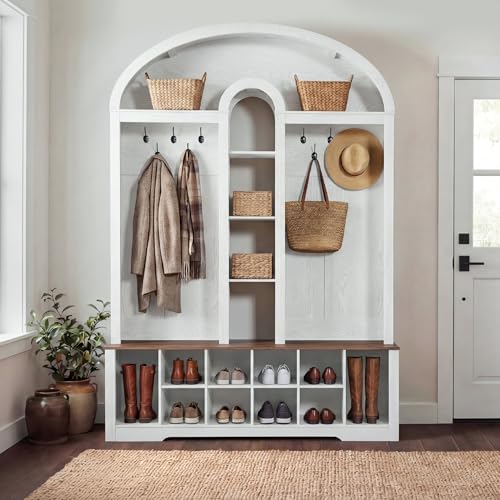
Small Mudroom Storage Areas
When square footage is tight, you have to pivot from horizontal thinking to a strong and intentional vertical strategy.
In a small mudroom (or even just a mud-wall), every inch must serve a purpose.Let’s now cover how to maximize a compact entry.
Use All Available Floor to Ceiling Space
In a small space, the floor is your most precious commodity.
Take advantage of the wall space.Instead of one hook per person, use vertical strips with 3–4 hooks mounted at different heights, ideally on different walls so the items on lower hooks aren’y buried below coats on the higher hooks.
Adults take the top, kids the middle, and bags/dog leashes the bottom.Install a shelf just below the ceiling for items you only need occasionally (like extra reusable bags or swimming goggles off season).
Trade the floor-unit shoe rack for “floating” racks or slim-profile cabinets that are only 6–8 inches deep.
Multifunctional Furniture
If you only have room for one piece of furniture, make it something that serve multiple purposes.
For example, don’t choose a bench that is just a seat.Choose one that has a flip-top for off-season storage or open space underneath for shoes.
An unstructured shelf will give you more storage space versus show cubbies since the dividers take up a good amount of room that could otherwise be used for she storage.Visually Streamline the Space
Small spaces feel cluttered much faster than large ones, and you can combat this by visually streamlining the space.
Choose a set of uniform looking baskets to cut down on the visual noise.
A neutral container color will also help to cut down on the noise.Declutter Regularly
Routinely evaluate what’s in the space and declutter regularly
When things start to look messy, take a beat to see if everything needs to be there.
If not, move it to the more appropriate space to prevent the mudroom from becoming overrun with stuff.
The seasonal change in weather is another good prompt to cue going through all of the coats, shoes and boots to make sure everything is in wearable condition and needed fur the season.
Keep only what you’re using now in the mudroom, not what you’ll need in six months when the weather is different.
Your small space won’t be able to store all of your coats, jackets, shoes or boots, so keep what you’re using now and move the rest elsewhere.
The front hall closet is a great alternative storage space for extra jackets and coats.
If you have kids, made sure that everything in the mudroom is their current size.
I can’t tell you what a difference just taking out too small items can make to free up space in the mudroom.
It can be the difference from an overstuffed room to one that is comfortable to be in, so don’t overlook the simple step of decluttering regularly.Utilize Dead Zones
Look for spaces you might be overlooking:
- Behind the Door: Over-the-door organizers with clear pockets are perfect for gloves, umbrellas, and sunglasses.
- Corner Units: Corners are often wasted. A corner coat tree or a triangular bench can turn an awkward nook into a functional zone.



When the Laundry Room Becomes the Mudroom
If your house lacks a traditional mudroom, the laundry room is often the most practical pivot.
Because these spaces already have durable flooring, laundry rooms are perfect for handling wet boots and muddy shoes.

Vertical Shoe Storage
Use the wall space across from or beside your machines for vertical racks.
This keeps the floor clear for walking and doing laundry.
The Built-In Bench
If you have a gap between appliances, a small bench with storage underneath can serve as the perfect spot to sit while tugging off boots.

Hooks Over Hangers
In a shared laundry and mudroom, skip the closet rod coat storage as the primary storage method.
Heavy-duty hooks are easy to use, meaning coats actually get hung up instead of ending up on the floor or bench.
This bank of hooks is positioned lower on the wall so that the upper cabinets can freely open, but also to accommodate the kids in the home.
They can easily reach the hooks and hang their coats and backpacks when the come home from school.
No Space? Entryway Mudroom Ideas
Carving a mudroom out of a main living area is a delicate balancing act.
You need the utility of a “dirt zone” without the aesthetic of a locker room clashing with your sofa and decor.
The goal is to make the transition feel like a deliberate design choice.
Here’s how to create a hidden in plain sight mudroom within a common living space:
Create a Boundary
Since you don’t have walls to define the space, use visual cues to tell the eye where the living room ends and the entry begins.
The Rug Boundary
Use a durable, low-pile runner or a stair-tread style rug that is distinct from your main area rug.
This creates a psychological border that visually carves out the space, no walls necessary.
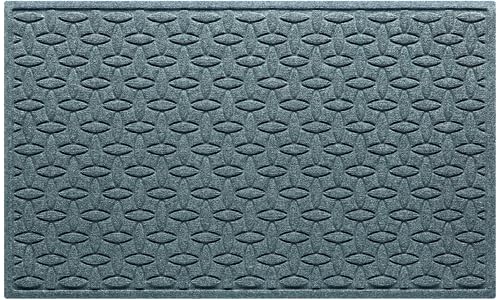
WaterHog mats are an excellent choice to trap dirt and moisture in your entry way.
They come in a variety of sizes, colors, and patterns and are easy to keep clean.
Furniture as a Partition
Use the back of a sofa or a sturdy bookshelf turned sideways to create a hallway effect.
The back of the furniture acts as a faux wall where you can place a slim console table.
The table can act as a console and you can add open shelving or baskets underneath to store shoes, hats, gloves, etc.
The Camouflage Method
In a main living area, open hooks and messy shoe piles can be an eyesore.
Aim for hidden in plain sight storage.
Instead of open cubbies, use a tall, narrow wardrobe or armoire.
You can close the doors on the mess, and it looks like a standard piece of living room furniture.
A wall-mounted cabinet kept low to the floor can act as a bench and shoe storage while maintaining a sleek, modern look that matches a living room aesthetic.
An ottoman with hidden storage to double as seating and off-season glove, hat and scarf storage.
High-End Materials
To keep the mudroom from looking utility-grade, match your hardware and materials to your living room decor.
Swap utility hooks for decorative brass, matte black, or vintage ceramic knobs.
Use a high-end upholstered bench cushion in a performance fabric (like Sunbrella ) that resists stains but looks like furniture-grade.
The Garage Mudroom Move
Many homeowners in the Greater Cleveland area and beyond deal with older house layouts that simply don’t have an indoor mudroom space.
If you’re landlocked and don’t have enough square footage, look to the garage to create a small mudroom.
Creating a garage mudroom is a practical way to keep the dirt out of your main living spaces.
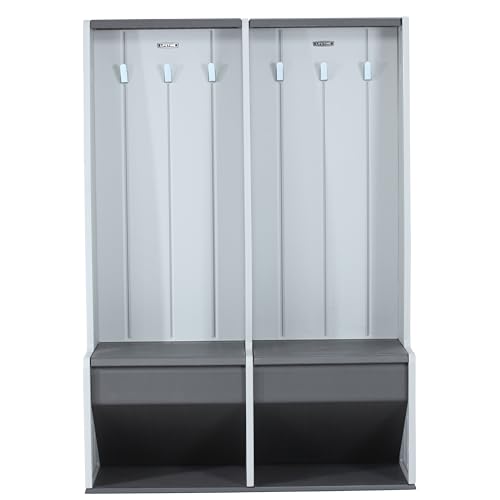
You can set up a heavy-duty bench and wall-mounted storage right next to the door leading into the house.
Use available wall space to organize boots and keep them off the floor.

For a small collection of boots, a wall mounted organizer will keep boots off the floor, preventing a pile of boots before it has a chance to form.
Carving out a mini-mudroom in your garage creates a transitional feel where everyone knows exactly where their stuff goes before they step into the main portion of the home.
Pro tip: If you use the garage, ensure your storage solutions are moisture-resistant.
Bins and bench materials should be able to handle the temperature swings and humidity common in garages.
I’ve rounded up great tips for keeping garage space organized in this post.
Over to you!
Carving out space in your home for a dedicated mudroom can make a such a huge difference in your life on a daily basis.
It can turn time with the potential to feel completely chaotic into a calm and peaceful experience.
Hope you love these mudroom storage ideas to create a calmer and more organized entry point for your home.
Organization Resources You’ll Love

Transform your space and eliminate clutter with the Label All the Things Printable Home Organization Bundle.
Our comprehensive printable household label collection offers an instant, stylish solution to help everyone in your household know exactly where things belong.

Master your household management with the ultimate organizational tool: the Organized Life Binder.
Featuring expert-designed trackers and checklists across 815 pages, this system helps you eliminate paper clutter and streamline your daily routines so you can focus on what truly matters.

Stop struggling with the clutter that’s blocking you from enjoying your home. Get the guidance you need to transform your space without overwhelm.
Get your copy of Organize and Declutter Your Life today.
Disclosure: I am a participant in the Amazon Services LLC Associates, the Container Store and Etsy Affiliate Programs, affiliate advertising programs designed to provide a means for sites to earn advertising fees by advertising and linking to Amazon.com, ContainerStore.com, and Etsy.com. This means that when you click and make a purchase at a site via a link I have provided, I make a small commission at no additional cost to you. Regardless of whether or not I receive a commission, I only recommend products that I personally use and genuinely recommend.
Last update on 2026-10-13 / Affiliate links / Images from Amazon Product Advertising API


